Summary
Audio uses your browser's built-in voice support.
In 2016, a National Sports Ministry official is reprimanded by the minister following India's poor performance at the Olympic Games. While touring a town in Andhra Pradesh, the official observes local youth demonstrating an exceptional dedication to athletics, all attributing their inspiration to an individual named Peddi. Intrigued, the official embarks on an arduous trek through forests and hills to reach a remote, nameless hilltop village to uncover Peddi's history.
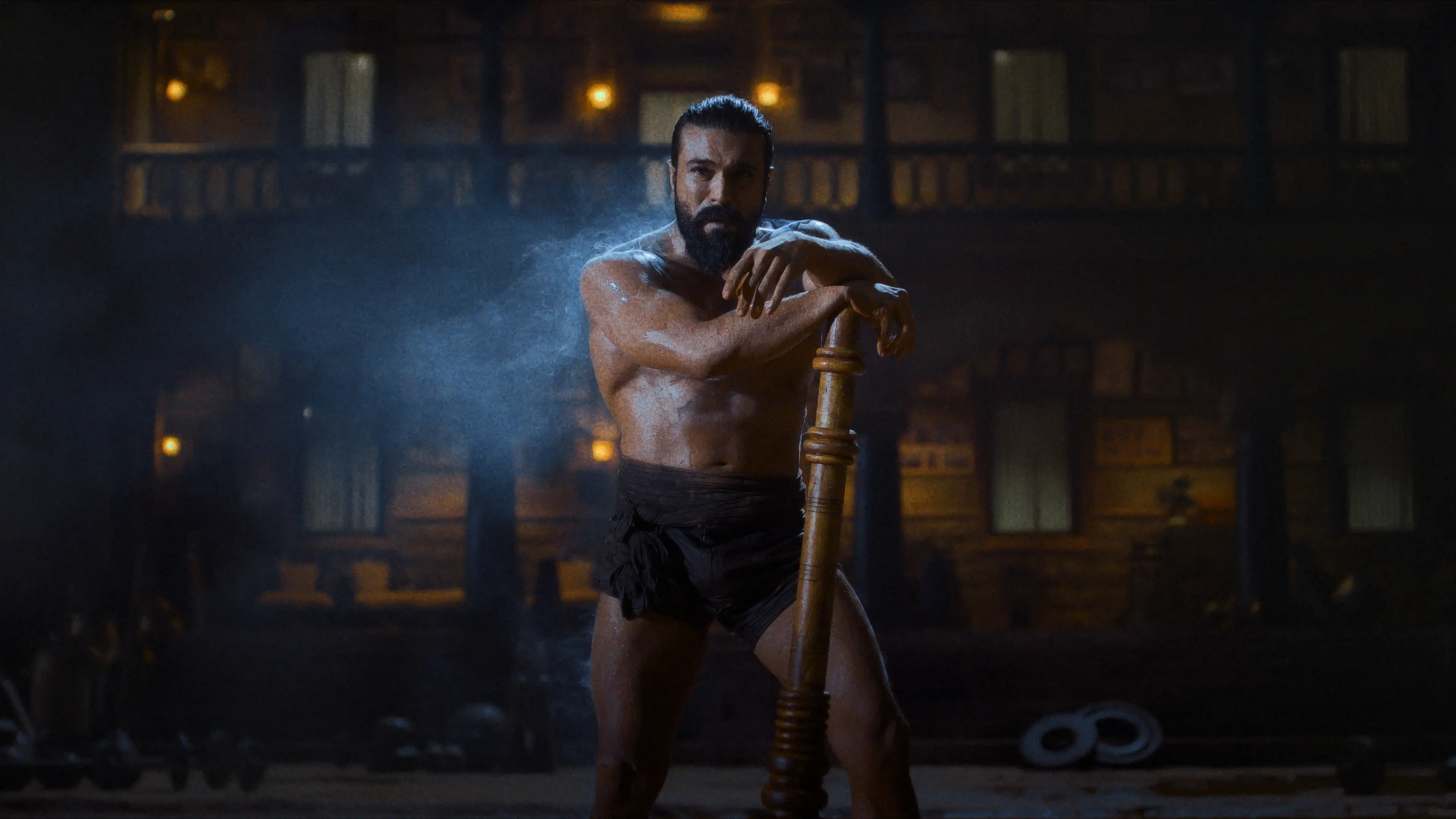
The narrative shifts to the late 1980s in a marginalized and undocumented tribal hamlet in the Vizianagaram region. The villagers face systemic social discrimination, economic exploitation, and violence from neighboring upper-caste landlords. Appalasoori, a resident of the hamlet, has spent three decades petitioning the government to have the village legally recognized, named, and granted a railway station to establish connectivity with the outside world. Peddi, another villager and Appalasoori’s companion, works as an aata coolie (sports laborer) possessing unmatched cricketing skills. He participates in regional tournaments for wages and maintains an undefeated record. During this period, he develops a romantic relationship with Achiyamma, the daughter of a local politician. When Rambujji, the nephew of her father's political rival, attempts to publicly humiliate Achiyamma by disrobing her, Peddi intervenes, leading to a violent altercation. In retaliation, Rambujji orchestrates Peddi's public humiliation during a local tournament, ensuring his defeat. Despite the loss, Peddi retains the admiration of the local public. Gournaidu, a veteran wrestler seeking to revive Vizianagaram's endangered traditional wrestling, recognizes Peddi's athletic potential and offers to train him, though Peddi initially declines.
The village suffers a severe setback when a child dies in the forest while the community is trekking back to work. A devastated Appalasoori presents his petitions to the local minister, only to be harshly rebuffed and humiliated. Driven to despair, Appalasoori commits suicide by stepping in front of a speeding train. Outraged by his death, Peddi and the villagers vandalize the railway tracks by setting them on fire, resulting in a brutal police intervention. Recognizing the systemic helplessness of his community, Peddi resolves to secure a legal identity for the village and approaches Gournaidu for training. Undergoing rigorous preparation, Peddi successfully advances through local and state-level wrestling competitions.
As he positions himself for a national victory, an envious rival inflicts a severe, career-threatening leg injury upon him. Despite the impairment, Peddi wins the tournament semi-finals before collapsing into unconsciousness. Upon awakening, he learns that the injury has rendered him permanently unfit for wrestling. Refusing a compensatory government desk job, Peddi separates from Achiyamma and travels to Delhi to meet the National Railways Minister. The minister dismisses his appeals, mocking his physical condition and labeling his injury an excuse.
Desperate to force a bureaucratic resolution, Peddi deliberately amputates his damaged leg, acquires a running blade prosthetic, and undergoes a grueling physical transition into a para-track athlete. He enters and wins a national track race, using his post-match victory speech to publicize his village's lack of legal recognition and the ongoing hardships of his people. The broadcast is watched tearfully by his villagers, Achiyamma - who has publicly proclaimed herself his wife - and a reformed Rambujji, who was moved by Peddi's determination.
Confronted with widespread public pressure, the central government officially recognizes the village and commissions a railway station. Although the government offers to name the station after him, Peddi requests that the village be renamed "Appalavalasa" in honor of Appalasoori. He returns home to a celebratory welcome, reconciling with his mother and Achiyamma. In the present day, the inspired government official resolves to implement a national initiative to identify and nurture grassroots sports talent in remote villages across India.
Source: Wikipedia (CC BY-SA 3.0)