Summary
Audio uses your browser's built-in voice support.
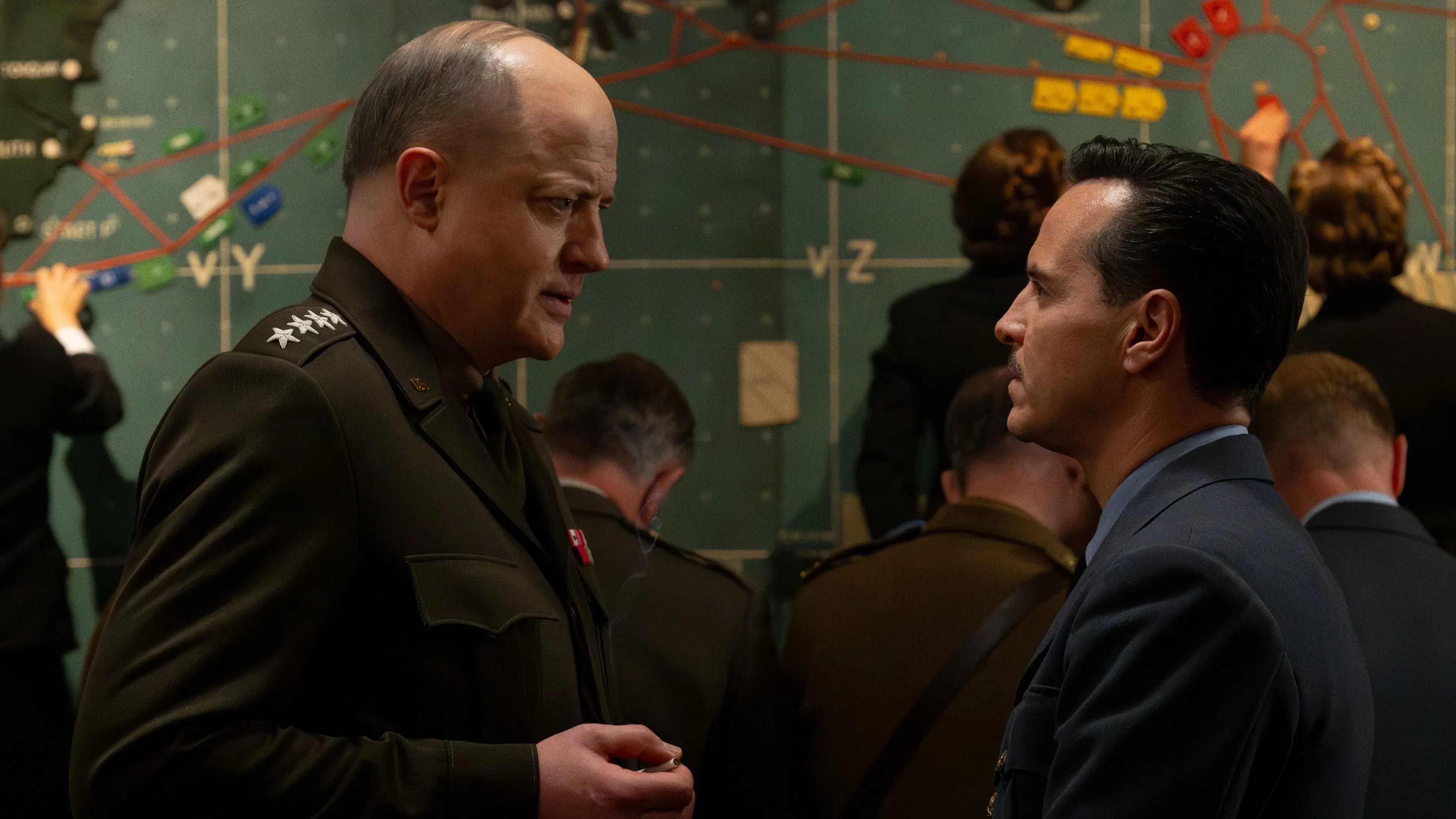
In June 1944, the Allied Forces are poised to launch Operation Overlord, the invasion of Nazi-occupied Europe. Success depends on a 72-hour window of manageable weather in the English Channel. General Dwight D. Eisenhower establishes his command at Southwick House, where the decision to launch or delay rests on the advice of his meteorological team.
The tension focuses on two lead forecasters with conflicting methodologies. Group Captain James Stagg, a meticulous Scottish meteorologist, analyzes real-time barometric pressure data and identifies a massive, volatile storm system approaching from the Atlantic. In contrast, Colonel Irving P. Krick, a charismatic American forecaster, utilizes historical weather patterns to predict clear skies and "invasion-perfect" conditions without mentioning poor weather forecast for Battle of Mont Sorrel in June 1916.
As the scheduled launch date of June 5 approaches, the "pressure" of the title becomes both atmospheric and psychological. Stagg faces significant pushback from high-ranking officers, including Field Marshal Bernard Montgomery, who are wary of losing the element of surprise. Stagg's anxiety is exacerbated by personal stakes, as the hospital where his pregnant wife is admitted was bombed and her status is unknown. Eisenhower’s personal assistant, Kay Summersby, acts as a confidante to the General as he weighs the risk of a disastrous amphibious landing against the tactical dangers of a postponement.
Haunted by the recent failure of Exercise Tiger, a rehearsal that resulted in heavy casualties, Eisenhower eventually trusts Stagg’s data-driven caution over Krick’s optimism. Upon Stagg's recommendation, Eisenhower elects to postpone D-Day to June 18. When the original date of June 5 is met with the violent storms Stagg predicted, based on the readings provided by Maureen Flavin Sweeney, at Blacksod, County Mayo his credibility is cemented. Later that day, Stagg's staff determines that there will be a brief window the following day for the invasion to launch. Reconciling with Krick, Stagg recommends to Eisenhower that D-Day be moved back up, to June 6. The film concludes with the launch of the invasion on June 6, 1944, successfully changing the course of World War II. Meanwhile Stagg visits the hospital, where he finds his wife and newborn son alive.
Source: Wikipedia (CC BY-SA 3.0)